
Federal Release Paths Near Graham
Federal custody is a system, not a building in Graham County. A person arrested on a federal matter may be held before trial under U.S. Marshals Service authority. USMS can place federal prisoners in federal, state, local, or private contract space. After conviction and designation, the Bureau of Prisons may take custody. Immigration detention is separate and may follow its own case and transfer path.
A departure from one building does not establish release into the community. A USMS prisoner can move to another contract jail or to BOP. A person leaving BOP can enter immigration detention, state custody, local custody, or federal supervised release. ICE may transfer a detainee between centers or record a recent release. Each result needs to be stated within the locator's limits.
| Custody stage | Public route | Key limit |
|---|---|---|
| BOP prison | BOP Inmate Locator | Does not show other custody or supervised release |
| ICE detention | ICE ODLS | Current and limited recent coverage, not a full archive |
| USMS pretrial custody | Federal docket and holding jail | USMS has no public inmate locator |
| Federal supervision | Federal docket and U.S. Probation | A BOP release result does not end supervision |
Check a Federal BOP Release
The BOP Inmate Locator covers federal inmates from 1982 forward. It accepts a register, DCDC, FBI, or INS number. A name search is also available. Number searches reduce mistaken matches, while name results should be compared with the available age, race, sex, and other identifiers.
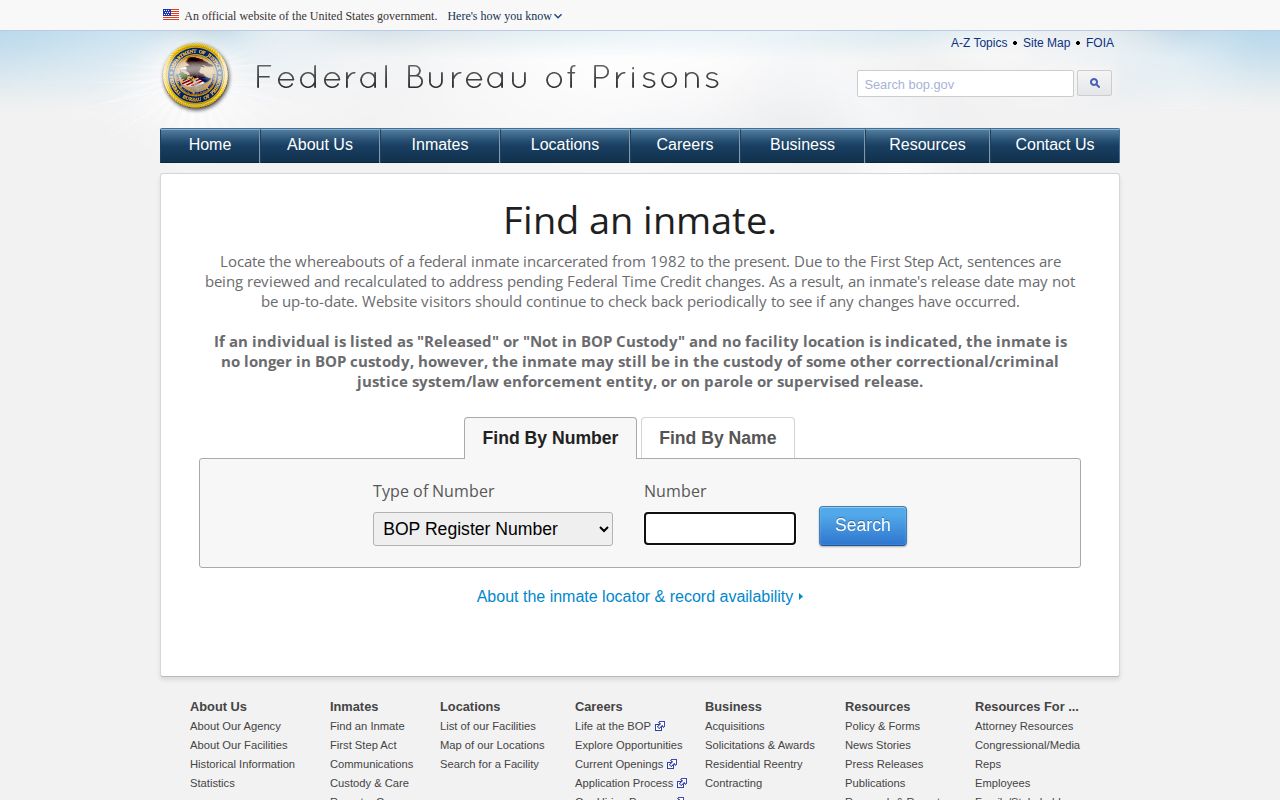
- Search by the most precise federal number available.
- If using a name, enter the verified spelling and compare all returned identifiers.
- Read the release date and facility fields together.
- Record a future date as projected because sentence recalculation can change it.
- Use the federal docket for release orders and any supervised-release term.
- Check other custodians separately if a state, county, or immigration hold is possible.
BOP explains that a past release date with no facility means the person was released on that date and is no longer in BOP custody. The status “Released” has the same BOP-specific boundary. It does not prove the person is free from ICE, a Kansas jail, another state, or supervision. Pre-1982 federal custody history may require the National Archives.
Check an Immigration Custody Release
ICE's Online Detainee Locator System, or ODLS, searches current ICE detention and some people released within the prior sixty days. The most exact search uses a nine-digit A-number and country of birth. A second route uses exact first and last name, country of birth, and optional date of birth. ODLS does not search children under eighteen, and some records may be delayed or excluded.
A missing result is not proof of release. The person may fall outside the recent-release period, be excluded from the public system, appear under different exact information, or be in another agency's custody. ICE's Detention Reporting and Information Line is 888-351-4024, Monday through Friday from 8 a.m. to 8 p.m. Eastern, with language help. Case-specific inquiries should use the exact identity and custody details available.
- A-number
- A nine-digit immigration identifier used with country of birth in the ODLS search.
- Recent ICE release
- A limited ODLS category, not a permanent immigration custody history.
- Transfer
- Movement between custodians or facilities while legal custody continues.
- Supervised release
- A federal court status after incarceration; it is checked through the docket and U.S. Probation, not BOP custody fields.
USMS Custody and Graham Cases
The U.S. Marshals Service handles federal prisoners from arrest through acquittal or release, or until delivery after conviction. It may use contract beds far from the place where charges began. USMS provides no public inmate locator. It also restricts release of prisoner histories, photographs, and arrival or departure times.
Use the federal court docket to identify detention, release, acquittal, sentencing, commitment, and supervision orders. Then contact the actual holding facility for its own physical movement record when public access permits. After BOP designation, switch to the BOP locator. Geography alone cannot tell which agency has legal custody.
No Graham Federal Facility
No BOP institution, ICE detention center, or USMS-operated detention facility was verified inside Graham County. No official source located an ICE detention contract with Graham County Jail. Those are verified research limits, not claims that Graham residents never enter federal or immigration custody.
A federal arrestee connected with Graham can be housed in a contract jail outside the county while USMS retains authority. ICE detention can likewise occur elsewhere. Do not infer that a Graham jail transfer was immigration-related without a recorded destination or receiving-agency confirmation. The sheriff's release entry can identify where a local booking went, while the federal or immigration system explains what happened next.
Federal Court Release Records
The federal docket can supply the legal event that no locator fully shows. It may contain a detention order, conditions of release, plea, sentence, commitment, revocation, or later supervision entry. PACER and the clerk of the federal court handling the case are the relevant access points. Use the district and case number when known.
A docket order and a physical exit can occur at different times. Pair the order with the actual holding facility's record when the exact departure matters. BOP's recorded past date confirms exit from BOP custody, while the docket can show whether supervised release follows. ICE ODLS may show only a limited recent window. Keeping these roles separate prevents a partial result from becoming an unsupported claim.
Federal Release Verification Steps
Begin with the originating case. Determine whether the person was a federal pretrial prisoner, a sentenced BOP prisoner, or an ICE detainee. Those categories can occur in sequence, but their databases do not merge. Write down each source's exact date, status, and facility label.
- For BOP, retain the register number and exact locator status.
- For ICE, use the A-number when available and note the limited recent-release scope.
- For USMS, obtain the federal case number and identify the actual holding facility.
- For supervised release, use the docket and the U.S. Probation office named there.
- For a Graham County booking, ask the sheriff whether the exit was community release or agency transfer.
If a public locator and docket seem inconsistent, timing or agency boundaries may explain the difference. A future BOP date is projected. An ICE absence can reflect exclusions or elapsed time. A release order may precede processing. Verify with the custodian responsible for the disputed fact.
Federal Systems Serving Graham
This combined facility page represents BOP institutions, ICE detention, and USMS contract custody that can serve Graham-related matters. It is not the profile of one local building. BOP manages sentenced federal prisoners after designation. ICE manages civil immigration detention. USMS holds and transports federal pretrial prisoners and can contract for beds.
Kansas VINE is a county-jail service and is not a federal locator. KASPER covers Kansas state corrections, not BOP or ICE. Graham County Jail records cover a local physical booking, even when another agency caused a transfer. Choosing the source by legal custodian is the most reliable way to trace release.
Read Federal Locator Results
A BOP result should be reported with the number, status, facility field, and date label that appear. A future release date is projected and can change after recalculation. A past release date paired with no facility means BOP reports that the person left BOP custody on that date. Neither display resolves a later ICE hold, state case, local booking, or term of federal supervision. Search the matching system when any of those paths is supported by the case.
ICE ODLS requires its own careful reading. Search results may cover current detention or some releases during the prior sixty days. Records may be delayed, excluded, or unavailable after that short period. Exact spelling, country of birth, date of birth when offered, and the nine-digit A-number can affect matching. An empty result should be described only as no current public result located, not as proof that ICE never held the person.
USMS presents the sharpest public-access gap. It maintains no public prisoner locator and does not release prisoner histories, arrival or departure times, or photographs through a general lookup. The federal docket identifies the legal order. The jail or detention site that physically held the person may maintain its own movement entry. Those two records should be paired when the exact exit is important.
Federal and Immigration Holds
One system's release can begin another system's custody. A detainer is a request or notice that can lead a holding agency to transfer a person to another authority. BOP may record release even though ICE or a state agency receives the person. A USMS contract jail may show departure while federal custody continues at a different site. The word “release” must always be tied to the agency and event.
For a Graham County connection, ask the sheriff whether its booking ended in community release or agency transfer. Do not label a transfer as immigration-related unless the release record names ICE or another confirmed recipient. When the federal docket, locator, and physical movement record agree, they provide a stronger account. When they differ, contact the custodian responsible for each field rather than choosing the broadest interpretation.